
Beyond Colonial Categories
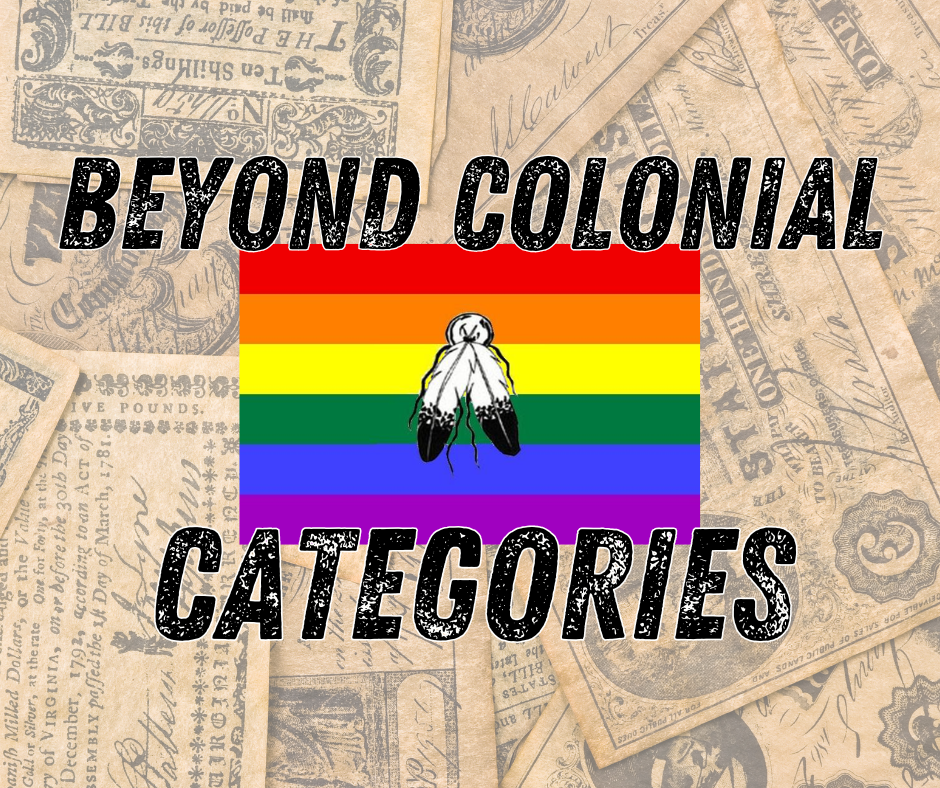
One of the enduring myths of colonialism is that it only took land. In reality, it also sought to reshape how people understood themselves, their relationships, their communities, and even their bodies. Through laws, churches, residential schools, and countless other mechanisms, colonial systems worked to suppress Indigenous languages, cultures, spiritual traditions, and ways of understanding gender and belonging. The goal was not simply political control. It was to replace Indigenous ways of being with European ones.
That history matters whenever we talk about Two-Spirit people. As a non-Indigenous person, I am conscious of the limits of what I can say here. My role is not to explain Two-Spirit identity but to encourage people to learn from Indigenous voices. Writers such as Kim TallBear have helped many of us understand that Indigenous ways of thinking about gender, sexuality, kinship, and community cannot be neatly squeezed into Western categories. Two-Spirit is not simply another identity to add to a list. It is a living tradition rooted in specific Indigenous peoples and cultures, many of which survived determined efforts to erase them.
Diverse understandings of gender existed across many Indigenous nations long before colonization, although they did not all look the same. Colonial systems often enforced rigid European ideas about gender and presented them as natural, universal, and unquestionable. The continued presence of Two-Spirit people reminds us that many of the categories we take for granted are neither as universal nor as inevitable as we have been taught.
This brings us back to belonging. Pride often focuses on who gets included within the categories we already have. Two-Spirit traditions invite us to ask deeper questions about those categories themselves, where they came from, and whose interests they serve. Colonial systems did not simply organize society. They privileged certain ways of being while marginalizing or erasing others. That history should make us cautious whenever we assume that our inherited categories are neutral. Sometimes belonging requires more than widening the circle. Sometimes it requires questioning the shape of the circle itself and listening to people whose wisdom was pushed aside long before most of us arrived on this land.