
Bayard Rustin Remembered
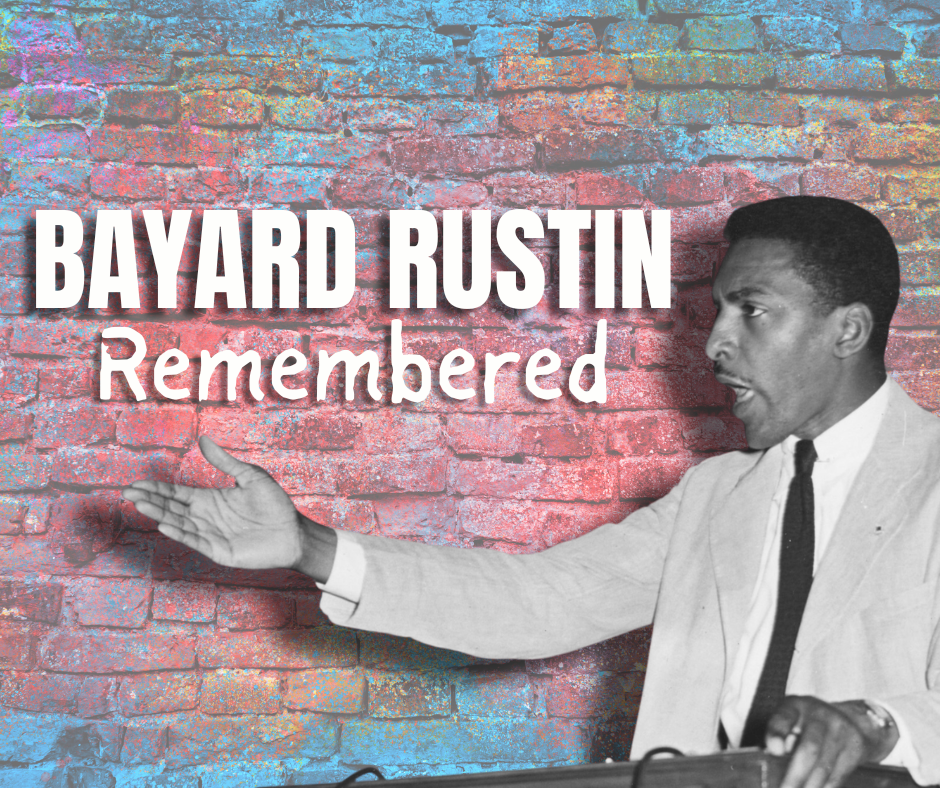
In August 1963, more than 250,000 people gathered in Washington, D.C. for what would become one of the most important demonstrations in American history. Most people remember the speech delivered that day by Martin Luther King Jr. Far fewer know the name of Bayard Rustin, the strategist and organizer who helped make the March on Washington possible in the first place.
Rustin was one of the most gifted organizers of the civil rights era. His commitment to nonviolence shaped the movement. His logistical brilliance helped turn vision into action. Yet many movement leaders feared that his identity as a gay man would become a political liability. Again and again, Rustin found himself pressured into less visible roles, not because he lacked ability or influence, but because some believed the movement could not afford to be associated with all of who he was.
That is what stays with me. The movement needed his leadership but often struggled to embrace his full humanity. It wanted his gifts, his labour, and his brilliance. It was less certain what to do with the man himself. Rustin’s story exposes something uncomfortable about many movements for justice. People can help build a movement and still find themselves standing at its margins.
When I think about Pride, I think about the people whose names we know and the people whose contributions were quietly folded into someone else’s story. Remembering Bayard Rustin is not simply about correcting the historical record. It is about asking whether we have learned anything from it. Are we creating communities that celebrate people’s gifts while merely tolerating their presence, or communities where people can bring their whole selves and know they belong?