
It’s Bisexual Visibility Month
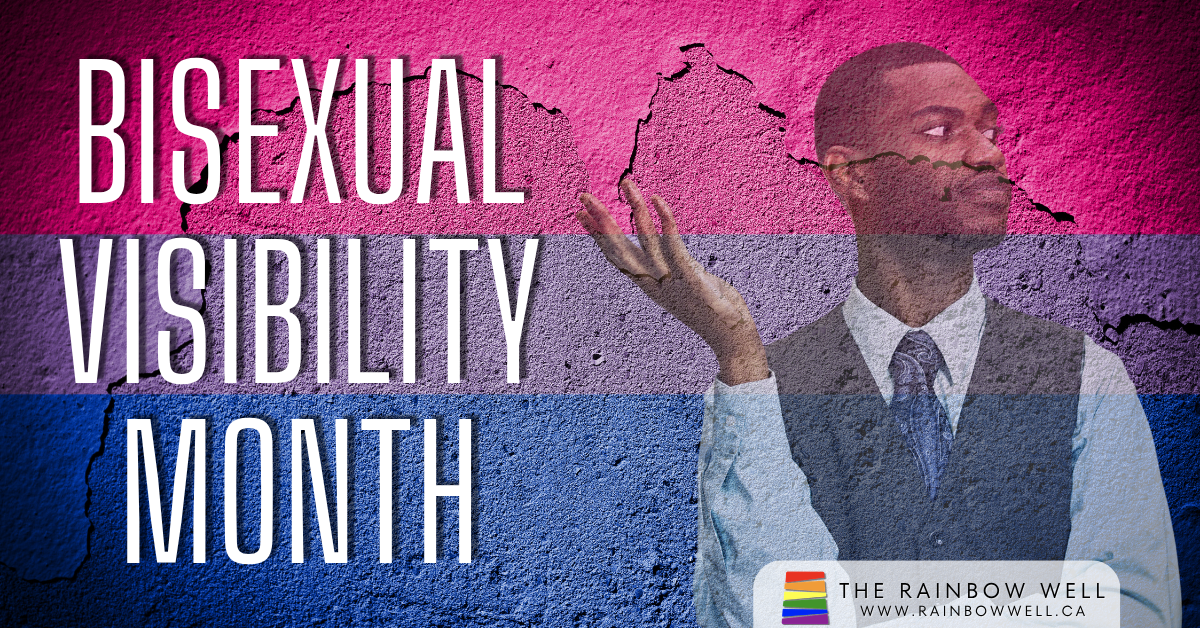
September is Bisexual Visibility Month. For bi+ people, visibility can be complicated because we’re so often defined by whoever we happen to be with (or not with). A bi person in a different-gender relationship is often assumed to be straight. A bi person in a same-gender relationship may be assumed to be gay or lesbian. The assumption makes part of who we are easier for everyone else to overlook.
That happens in churches too, including churches that have worked hard to become 2SLGBTQIA+ affirming. Bisexuality is often present in the initialism without being particularly well understood on its own terms. We can still operate with an underlying assumption that people are ultimately either gay or straight, and then interpret relationships, marriages, families, and even people’s place within queer community accordingly.
Earlier this year, I wrote about this for Broadview in “Why Bisexual Christians Still Feel Unseen In Affirming Congregations.” I argue that the issue is bigger than simply making bisexual people more visible. Bi+ experience can expose something about the limits of how we imagine belonging itself. If people are welcome only when their lives can be translated into categories we already understand, we may have widened the circle without questioning some of the assumptions that created exclusion in the first place.
So this Bi Visibility Month, we are celebrating bisexual Christians in all the different forms their lives and relationships take. Single, dating, partnered, or married. With someone(s) of the same gender, another gender, or no one at all. Bisexuality does not become more or less real according to what other people can see. Our hope is for churches where bi+ people don’t have to simplify ourselves in order to belong, and where being fully seen is understood as part of what genuine affirmation requires.