
Authentically Me: An Interview With David V. Hall
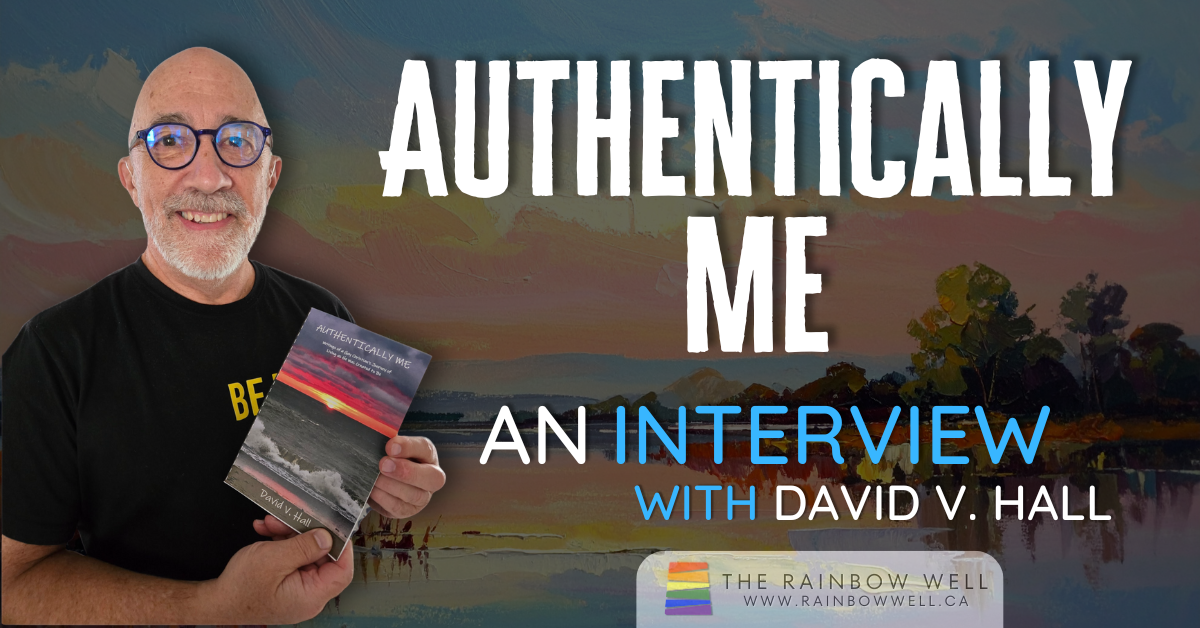
Authentically Me is a deeply personal memoir written not to persuade, defend, or explain, but to tell a story of hope and flourishing. Written first as a private act of recovery, the book traces one man’s journey of holding faith and identity together under the weight of shame, fear, and silence. What emerged is not an argument, but a witness to what happens when fear is released and love is allowed to take root.
David Hall is a gay Christian who spent decades believing that authenticity and faith could not coexist. After coming out later in life, David began the slow work of reconstructing his understanding of God, self, and belonging. Authentically Me reflects that journey with honesty, humility, and grace. It speaks especially to those who have tried to pray themselves into being someone else, who have carried religious trauma quietly, or who fear that living truthfully might cost them everything.
In this interview, David reflects on why he chose to share his story publicly, who the book is for, what it cost him to live honestly, and how authenticity reshaped his faith. His words offer a gentle but powerful reminder that faith rooted in fear is not the same as faith rooted in love.
Jamie Arpin-Ricci: Thanks for doing this interview, David. Why did you decide that the journey you write about in the book needed to be shared publicly?
David Hall: I originally wrote these reflections privately as a cathartic practice to process the pain of coming out later in life after 58 years of silence. Writing was part of my recovery. I had no initial intention of sharing it publicly.
It was my husband, Jim, who encouraged me to consider turning those writings into a book. His perspective was simple and grounding: if even one person could be spared the shame, fear, and prolonged suffering that I endured, then the story was worth sharing. This book exists not to persuade, but to bear witness—to say, ‘You are not broken, you are not alone, and you are who God created you to be.’”
JAR: Who is this book written for? What do you want them to take from it?
DH: The book was first written for me as a private, cathartic practice to survive and heal from years of religious trauma. A close friend once reminded me to hold the words with the intention that they were “about me, to me, and for me.” That grounding allowed the writing to remain honest and unfiltered, without trying to explain or justify my existence to anyone else.
As it became a book, it widened to include anyone who has been told—explicitly or implicitly—that they are a mistake, broken, or unworthy because of who they are. If someone else reads my journey, I hope they come away knowing this: they are not a mistake; they are exactly as God created them to be. Their story and their journey are as important and as sacred as mine. And just as importantly, their story deserves to be told and heard—whether publicly or privately, loudly or quietly, in their own time and in their own way.
JAR: Many 2SLGBTQIA+ Christians carry a tension between authenticity and belonging. How did that tension shape your faith over time, and what did it cost you to live honestly?
DH: For much of my life, my faith was shaped by an impossible tension: being taught that God is love while also being told that being gay – the way God created me – deserved eternal punishment. I wrestled with how a loving God could knit me together intentionally and still condemn me to hell for living as who I am. That contradiction turned faith into fear and left me ashamed of my own existence.
Scripture itself deepened the conflict. Psalm 139 says God formed my inmost being, wove me together in my mother’s womb, and knew all my days before I was born (Psalm 139:13–16). If I was wonderfully and purposefully made, how could my life be a mistake? That question haunted me as I tried to contort myself into something “acceptable,” at enormous cost to my mental, physical, emotional, and spiritual health. I relied on medications, alcohol, and gambling to numb the pain, and I lived with suicidal ideation and attempts – not because I rejected God, but because I was trying to survive a theology that taught me my being was sinful.
Choosing to live authentically as who God created me to be changed my faith. The fear of dying loosened its grip, and in its place grew resilience, freedom, and a deeper closeness to God than I had ever known. Authenticity did not destroy my faith – it stripped away fear and made room for the abundant life Jesus promised (John 10:10). Living honestly cost me belonging and certainty, but it gave me something greater: a faith rooted in love, not terror, and the freedom to live fully as the person God has always known me to be.
JAR: What surprised you most in the writing of the book?
DH: What surprised me most in writing the book was the quieting of the swirl that had lived in my head for so long. As I put words to the story, the constant ruminating began to loosen its grip. My thinking became clearer, steadier, and more spacious. For the first time, there was room not just to revisit old pain, but to think more deeply and differently about faith, identity, and God, discovering hope and peace and learning how to live in each moment without fear
I was also surprised by the sense of gratitude that emerged—for the journey itself and for how far I’ve come in discovering who God created me to be. I didn’t realize how much weight my being had been carrying until it began to lift. Writing revealed a lightness I hadn’t known before, a freedom that came from no longer needing to justify my existence.
Perhaps most humbling of all has been how the book has been received. Hearing how others see their own lives reflected in parts of my journey has been overwhelming in the best way. I never set out to tell anyone else’s story, yet God has used my honesty to speak love, hope, and belonging into the lives of others. I’m deeply humbled and grateful that God chose to tell His story of love through me—and that what once felt like a burden has become a blessing.
JAR: What didn’t make it into the book that you wish you had included?
DH: There isn’t anything I feel I missed including in the book. While parts of my journey required going back – revisiting old wounds, memories, and beliefs – I never had the sense that something essential was left out. The story I told unfolded as it happened in my healing and recovery, capturing a journey that was always moving forward.
What I do recognize, though, is that the journey continues. Healing, faith, and becoming are not fixed destinations; they are living processes that keep unfolding. The book captures a season of reflection and growth, but it doesn’t close the story. I’m still moving forward, carrying the wisdom of the past without being bound by it, learning more about God and myself as life continues to unfold. In that way, what comes next isn’t missing – it’s still being written.
JAR: Any future writing projects in mind?
DH: I’ve given it some thought. Others, especially Jim, who have read the book have seen and heard my journey after it’s release, have said they see a follow up book. As in the previous answer, what comes next isn’t missing – it’s still being written.
JAR: Thanks, David!
. . . .
David’s story reminds us that authenticity is not a rejection of faith, but often the path back to it. Authentically Me offers companionship to those still finding their way, and hope to those who have been told they do not belong. We are grateful to David for his courage, his honesty, and his willingness to bear witness to a God whose love makes room for truth, freedom, and joy.