Pride & the Banning of 2slgbtqia+ Books
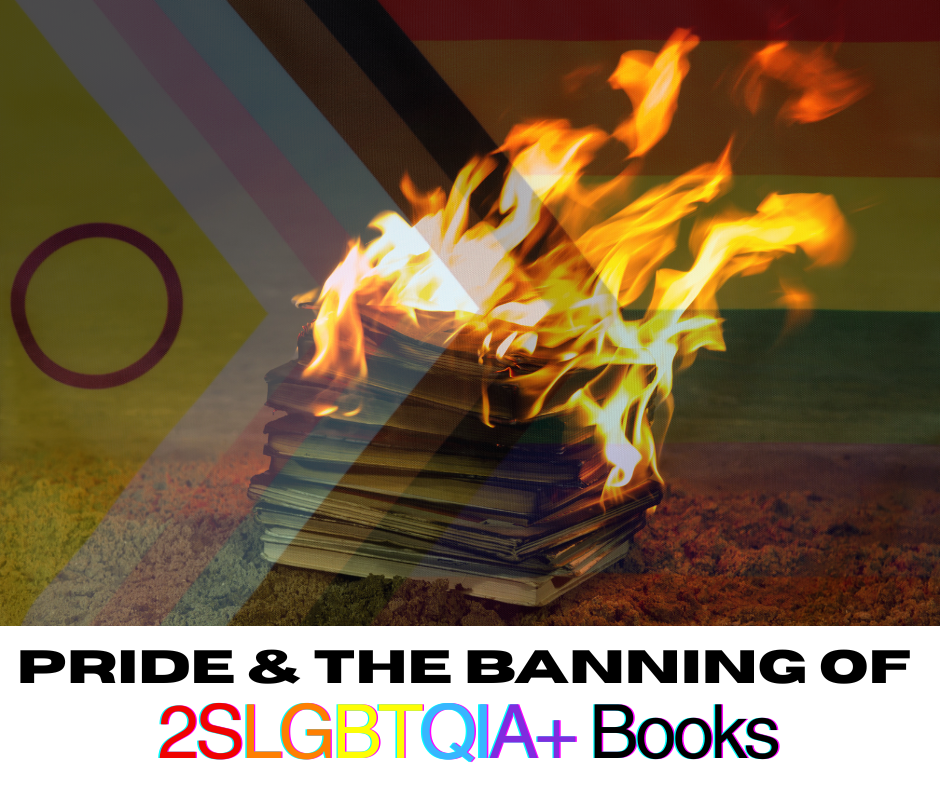
Pride is a celebration of visibility, but visibility is under attack, especially for those at the intersections of queerness, race, gender, and class. In the past year alone, over ten thousand attempts to ban books were recorded in public schools across the United States, targeting more than four thousand unique titles. A quarter of these included 2SLGBTQIA+ content, and nearly a third centered trans and gender-diverse characters. Books by Black, Indigenous, and racialized authors were disproportionately affected. These bans are not neutral. They are targeted attempts to suppress stories that challenge white, cisgender, heteronormative control over culture and identity.
Censorship does not just silence individuals. It strips communities of the tools we need to tell the truth, to heal, and to imagine something different. When queer and trans youth of colour are denied access to stories that reflect their realities, they are denied belonging. When Indigenous and Black queer authors are removed from shelves, it reinforces a legacy of colonialism that polices identity and erases memory. Pride was born as a protest against that kind of suppression. It is not just about being visible. It is about disrupting the systems that decide who gets to be seen at all.
This Pride, we must remember that banning our stories is not new. Queer and trans books have been burned, banned, and buried for generations, from the destruction of early trans research archives in 1930s Berlin to the quiet removal of queer texts from classrooms today. These acts are never just about books. They are about controlling memory, denying history, and cutting people off from the language that makes survival possible. Pride calls us to resist that erasure. Not only by protecting the stories that remain, but by telling the truth about why they are being targeted.
What they fear in our books is not any real danger.
It is our power and our freedom.