
The Belonging We Failed To Design For
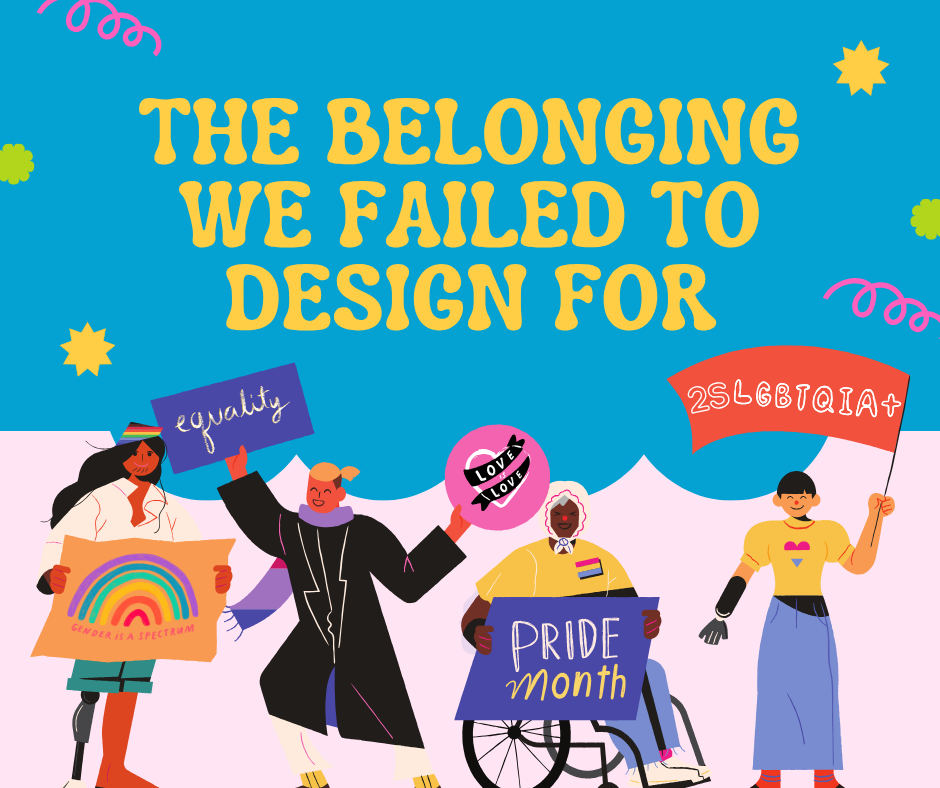
For much of my life, I assumed that if I cared enough about a cause, I should be able to show up for it in the ways others did. Marches. Meetings. Events. Organizing. Constant availability. Chronic illness has forced me to confront the reality that many movements, including queer ones, often assume a particular kind of body, energy level, and capacity. The exclusion is rarely intentional, but that does not make it any less real.
When we talk about disability and Pride, the conversation often focuses on accessibility. Are there ramps? Is there seating? Are there quiet spaces? Those questions matter. But they point to a deeper one: Who was imagined to be part of the community in the first place? When accommodations are added later, they reveal something about who the event was originally designed for. Accessibility is important, but it is not the same thing as belonging.
This is one of the central insights of disability justice, a framework shaped in significant ways by disabled queer and trans people of colour such as Mia Mingus and the late Stacey Park Milbern. Disability justice asks us to move beyond the question of whether disabled people can participate and toward the question of whether disabled people are helping shape the vision itself. Too often, disabled people are treated as recipients of inclusion rather than leaders, thinkers, organizers, and builders. Yet some of the most important work on interdependence, community care, and collective liberation has come from disabled activists whose experiences forced them to imagine different ways of being together.
Pride invites us to imagine a world where everyone can flourish. The challenge is that flourishing is often pictured through the lens of people who have the (relative) time, health, energy, mobility, and resources to participate easily. What if we started from the margins instead? What if we designed our communities around the people most likely to be excluded rather than trying to fit them in afterward? What we would discover is that accessibility is not a concession we make for a few people. It is part of what makes genuine belonging possible for all of us.