
United Church of Canada offers a formal apology to 2S and LGBTQIA+ people
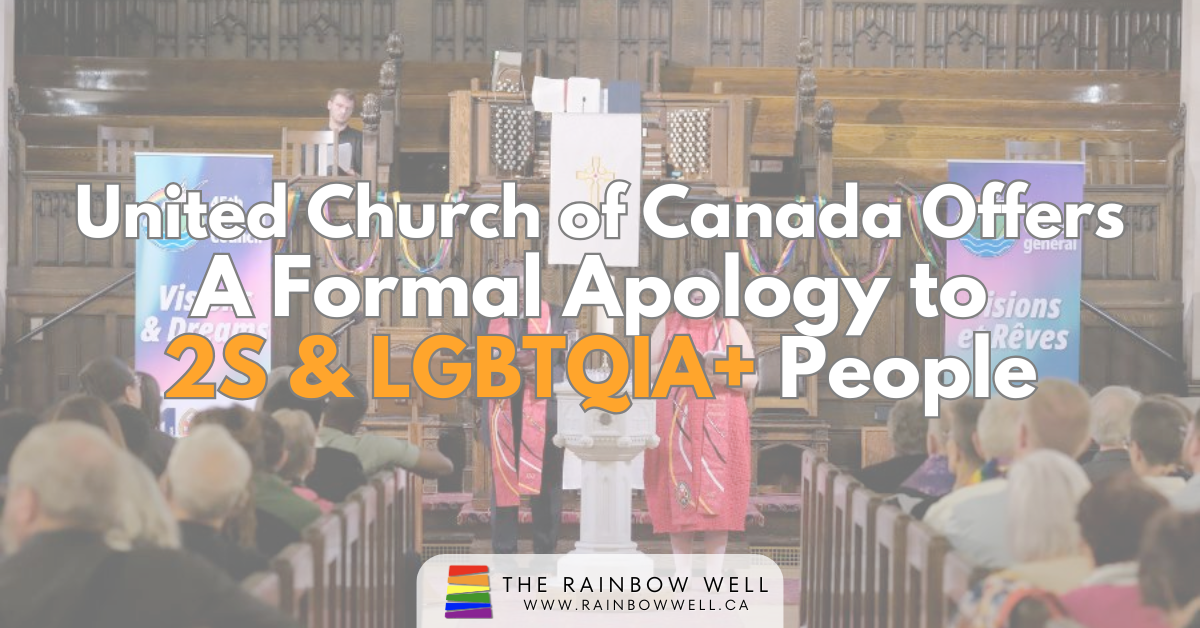
This summe, the United Church of Canada offered a formal apology to 2S and LGBTQIA+ people for the harm it has caused. The apology was delivered in a worship service at Knox United in Calgary during the 45th General Council. Moderator Carmen Lansdowne and General Secretary Michael Blair led the service, which included a ritual blessing of water symbolizing cleansing, renewal, and vulnerability. The apology was not hidden in back rooms or committee reports but spoken in worship and shared by livestream so that it could be witnessed by many.
The apology names the wide range of failures the church has been responsible for. It acknowledges harassment, exclusion from leadership, threats to safety, loss of income, and the spiritual and emotional toll on queer people. It also confesses silence, ignorance, and complicity. Importantly, it recognizes that for many this apology has come too late or may never be enough to heal what has already been broken. Yet the church committed to live into the apology, promising not to let fear or perfectionism prevent real action.
This moment did not come out of nowhere. It is the result of years of listening, lament, and testimony. Projects like Iridesce, The Living Apology, and other consultations provided space for queer voices to speak truth to the church. In 2023 an Apology Task Group was created to draft the statement in conversation with church leaders and with queer communities. What emerged was a confession that also carries a commitment to ongoing change.
An apology is not everything, but it is not nothing either. To speak words of regret and sorrow in worship is to model accountability and bring failure into the open where it can be faced honestly. Symbolic gestures like the sprinkling of water matter because they make visible the desire for cleansing and newness. Yet the church itself admits that the real test will come in how congregations, presbyteries, and church agencies live this out. Will queer people experience safety, belonging, and leadership opportunities? Will budgets, policies, and education shift to reflect this new direction? These changes will be the proof that the apology is more than words.
There are dangers to be mindful of. It would be easy for the church to become complacent, treating the apology as though it were an endpoint rather than a beginning. There is also the risk that the apology could be co-opted as public relations rather than real transformation. For many who carry the deepest wounds, an apology without follow-through risks reopening harm instead of healing it. The setting adds weight too. To deliver this apology in Alberta, a province where recent laws have targeted trans people and restricted gender-affirming care, makes the moment especially charged. It highlights that queer lives are still contested and that solidarity and action are urgent.
It is also important to note that Two-Spirit is listed separately in the apology. This is not redundancy but recognition. Two-Spirit identities emerge from Indigenous nations and carry cultural, spiritual, and communal meanings that are not interchangeable with Western categories of sexuality and gender. By naming 2S distinctly, the church acknowledges both the unique harm that colonization and the church’s own history inflicted on Indigenous peoples and the importance of honouring Two-Spirit people on their own terms. This recognition is essential if the apology is to have integrity and if it is to resist collapsing Indigenous identities into broader categories that erase their distinctiveness.
For queer Christians, this moment is bittersweet. It tells truths we have long known and offers signs of hope. Yet it also reminds us how much remains unfinished. The task before us is to insist that apologies become actions that repair, transform, and create new life. The invitation is to reflect on what a living apology would look like in our own communities. What does repair mean for you in your journey of faith? What signs of change would convince you that healing is possible?
The United Church’s apology matters because it shows what it looks like for a community to speak words of accountability in public and to risk confession as part of worship. It will only matter in the long run if those words are lived out in practice. Let us receive this apology as a starting point rather than a conclusion, and let us continue to build communities of faith that embody safety, belonging, and joy for every one of us.
May we see others follow this path.