
WHEN OUR OPPRESSOR DIES: THE BURDEN OF GRIEF WHEN THE WORLD HONOURS HARM
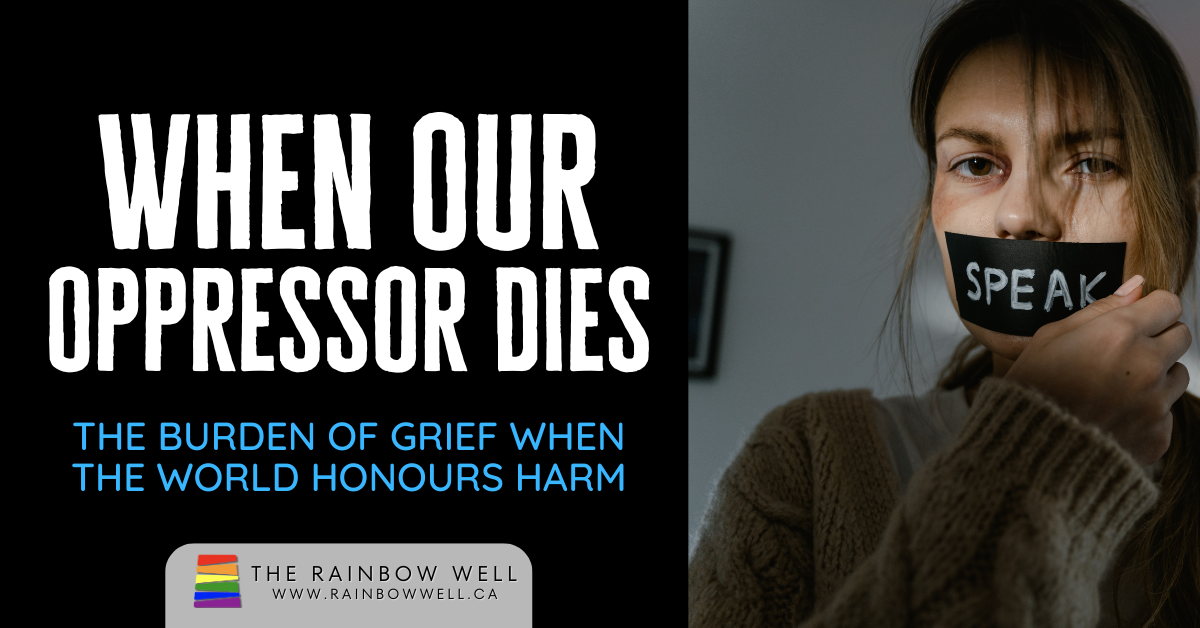
When a notable public figure dies, one who has spent their life and career opposing and demonizing 2SLGBTQIA+ people, the public response is often filled with admiration, honour, and even celebration. For many, their deaths are an occasion to recount accomplishments, highlight charisma, or speak of their influence. Many progressive leaders even get involved. Yet for many of us in the 2SLGBTQIA+ community, the story is much different. We remember the sermons, the policies, the slurs, and the campaigns that left us wounded and targeted. We remember the way our families and neighbours were turned against us. We remember how their voices gave cover to systems that continued to harm us day after day. Watching the world mourn or glorify them reopens wounds that never fully healed.
The difficulty is not that we are incapable of compassion. Many of us hold firmly to the belief that every life carries dignity, even the lives of those who worked against our existence. What hurts is when dignity is confused with celebration, when respect becomes uncritical praise, and when grief for the individual leaves no room to name the real harm they caused. In those moments, the dominant culture not only forgets our suffering but also reinforces it, signalling once again that our lives matter less.
When those people are known as people of faith, the church all too often goes even further. Their Christian rhetoric is elevated above their actions. Sermons are preached that sanctify their prejudice as conviction. Tributes are offered that cloak their legacy in respectability, turning faith into a shield that protects them from accountability. This Christianized version of respectability politics silences the prophetic call of God’s people to speak truth to power, reducing faithfulness to politeness.
Some will say we should remain silent out of respect, that to speak truth about a person’s harmful legacy at their death is improper. Yet while the dishonest praise is allowed and encouraged, silence is precisely what has allowed these legacies to grow unchecked. For decades, our voices have been dismissed as bitter or unforgiving whenever we dared to speak honestly about the damage inflicted by celebrated leaders. The truth is that naming harm is not cruelty. It is the first step toward healing. To pretend otherwise is to ask us to participate in a lie for the sake of someone else’s comfort.
It is also important to acknowledge how celebrations of such figures reinforce ongoing violence. Their ideas live on, shaping policies that strip trans people of healthcare, denying queer families the right to exist, and fuelling the rhetoric that inspires harassment and hate crimes. When their deaths are treated as the passing of heroes rather than as an opportunity to confront their harmful legacies (and our own complicity in them), the cycle of violence is perpetuated. Our silence in these moments does not create peace. It gives cover for injustice to continue.
What we need instead is humble yet unflinching honesty. We need to hold together two truths at once: that every person is a divine image bearer, and that some legacies must be named for the devastation they caused. Grief can make space for truth. It can allow us to mourn while refusing to glorify harm. That is not disrespect. It is the deepest respect for life itself, including the lives that were diminished by the one now being remembered.
For those of us who are queer and trans, these moments remind us of the urgency of our work. We cannot stop others from celebrating, but we can continue to embody communities of love, justice, and belonging that outlast the rhetoric of those who opposed us. Our task is not to match their campaigns of fear with silence or despair in kind but to invest ourselves into a lived vision of hope that is strong enough to rival their legacy.
In this, we find our strength, our solidarity, and our future.